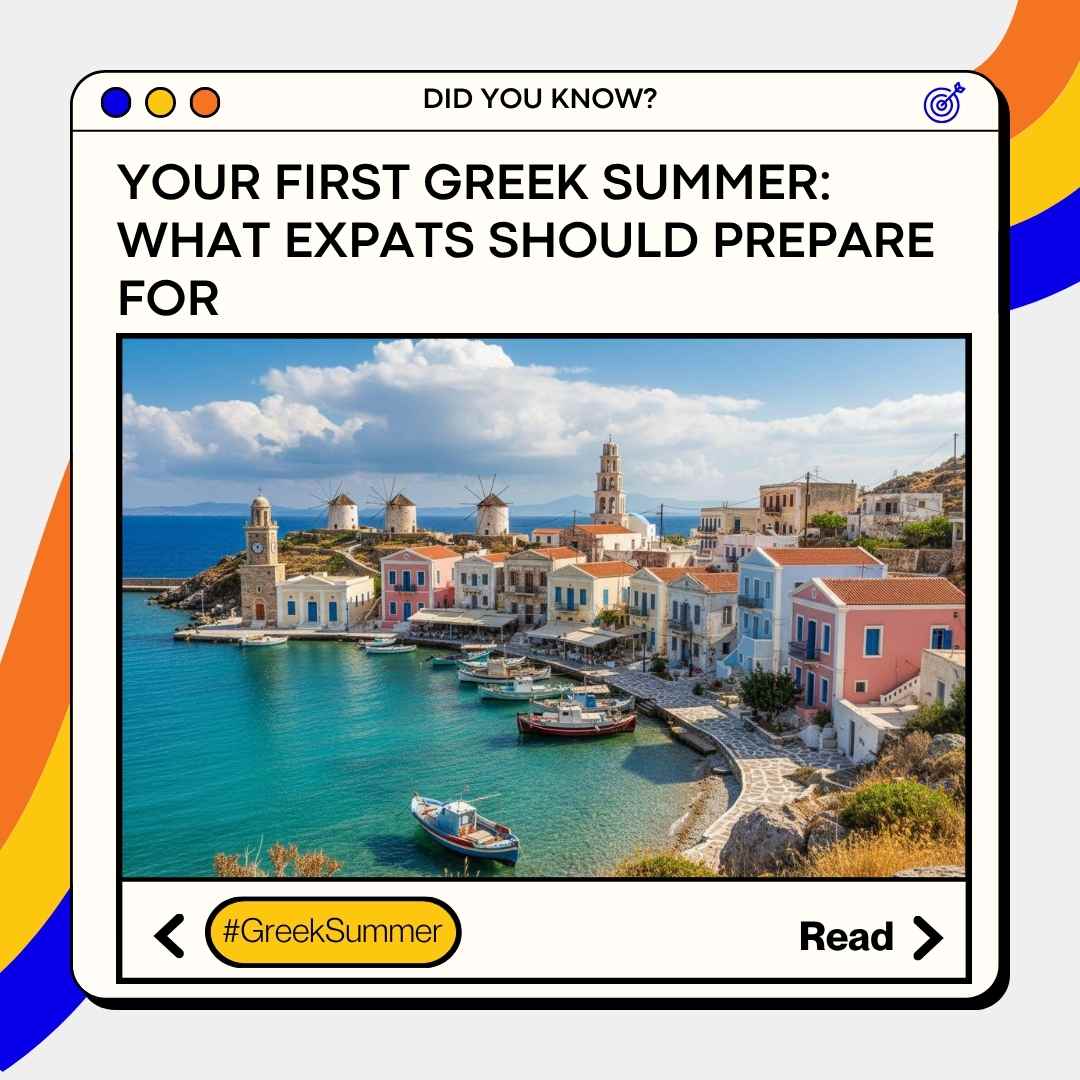
Your First Greek Summer: What Expats Should Prepare for Starting in May
Learn more


If you’re moving to Greece, the beach becomes one of the best parts of your routine. A simple swim can easily become an entire afternoon with friends or family. But your first few beach days may come with a few surprises.
The beaches here are not all the same. Sometimes you might find a fully organized stretch of sand with sunbeds, a beach bar and table service. Other times, you may be on a quiet cove with no shade, no facilities and nowhere to buy water. Understanding the local rhythm makes it easier to enjoy both.
Whether you are newly living in Greece as an expat or simply visiting while planning a longer move, this guide explains what to expect from Greek beach culture, how to prepare, and how to feel at home by the sea.
Beach days in Greece are usually social, flexible and unrushed. If Greek friends invite you for a swim, what starts as a quick dip can easily turn into coffee, lunch at a nearby taverna, another swim and a late drink by the water. People often arrive late in the morning or early afternoon with towels, books, snacks, water and sunscreen, then stay until the light starts to soften.
It may take some adjustment if you are used to fixed plans, but try not to take the relaxed timing personally. The point is not to fit everything into a perfect schedule. It is to make space for the day to unfold, which is one of the small lifestyle shifts many newcomers notice when living in Greece long term.
How to adapt: Bring more than you think you need, including water, sunscreen, a hat, snacks, a towel, a book and a change of clothes. Leave some room in your schedule too, because a simple beach plan can easily become an all-day outing.
Greece has every kind of beach experience, from busy, polished resorts to completely untouched coves. Before you leave, check whether the beach is organized, if there’s shade, or whether you will need a car to go there.
If you are still choosing where to settle, beach access can be part of a wider decision about daily life, transport and neighborhood atmosphere. It is worth considering alongside the practical steps of moving to Greece, especially if being close to the sea is one of your priorities.
How to adapt: Before you go, quickly check online i.e. Google Maps whether the beach has sunbeds, shade, bathrooms, parking, or a café nearby. You can also call if the beach does not have a website. If it is unorganized, bring your own umbrella, water, and supplies.
Beach bars are a big part of the summer experience in Greece, especially on popular islands and near larger towns. In some places, buying a drink or food gives you access to a sunbed. On other beaches, there is a fixed daily charge, sometimes with a minimum spend. Prices can vary greatly depending on the location, season and how close you are to a well-known beach club.
Here are some helpful tips to make the best use out of your summer:
How to adapt: Always ask how the sunbed system works before sitting down. Some places charge a flat fee, while others let you use the beds if you order food or drinks.
During July and August, the strongest sun is usually between late morning and mid-afternoon. Many locals either go early, leave for lunch, or arrive later in the day when the heat is easier to handle. An evening swim after work is also common, particularly for people who live near the coast.
Here are a few simple ways to stay comfortable and protected during hot summer beach days:
A little preparation means you can stay longer and enjoy the day without chasing down the nearest shop.
For a typical Greek beach day, pack:
Greek beaches are shared spaces. A few small habits help keep them enjoyable for everyone:
These details matter because the coastline is one of Greece's greatest shared resources. Leaving a beach as you found it is a simple way to respect the place you are choosing to call home.
Some people bring fruit, sandwiches, iced coffee or homemade snacks. Others prefer to swim first and head to a nearby taverna for grilled fish, Greek salad, fried courgettes, souvlaki or whatever is freshest that day. Either way, lunch after the beach is often unhurried.
This is one of the pleasures of living in Greece as an expat: the day does not have to end once you have dried off. A beach outing can become a small ritual, particularly once you find the local spots that feel like your own.
The biggest adjustment is often not practical but emotional. Greek beaches are places to cool off, of course, but they are also where people meet, rest, celebrate and make summer feel slower. Once you stop treating a beach day as something to squeeze between other tasks, you begin to understand the rhythm of it.
So pack your swimsuit, bring plenty of water, order a chilled coffee if you feel like it, and do not rush back. Whether you are just beginning your journey of moving to Greece or have already made the country home, the beach is one of the easiest places to feel part of everyday life here.
It depends on the beach. Some beach bars offer sunbeds when you order food or drinks, while others charge a set fee or require a minimum spend. Public areas are usually available too, where you can use your own towel for free.
Early morning and late afternoon are often the most comfortable, especially in July and August. The sun is strongest from late morning to mid-afternoon, so many locals avoid the hottest hours or stay under shade.
Yes. Bringing water, snacks and fruit is very common, particularly on quieter or unorganized beaches. Just take all rubbish away with you when you leave.
Many are. Organized beaches can be easier for families because they may have toilets, food, shade and calmer access to the water. Check sea conditions and facilities in advance, especially when traveling with young children.
Bring enough water and sunscreen, check whether there are facilities, understand the sunbed policy before sitting down, and allow more time than you expect. A Greek beach day is often a social occasion rather than a quick swim.
Are there free beaches in Greece?
Yes. Greece has an extensive public coastline, and you can usually find areas where you can sit with your own towel without paying. Some of the most popular beaches also have paid sunbed sections alongside free public space.
Learning the language is one of the best ways to experience Greece beyond the surface. It helps with everyday moments, from ordering at a beach taverna to understanding local signs, chatting with neighbors, and feeling more confident in daily life.
Through our partnership with Berlitz Athens, you can start a Greek language course that fits your relocation timeline and personal goals. To connect with a Berlitz Language Coordinator and find the right program for you, email us at info@mygreekexpatjourney.com.
Adapting to Greek beach culture is one part of settling into life here, but a long-term move also comes with practical steps. Before relocating, it helps to understand the basics of residency, housing, healthcare, transport, banking, and the overall cost of living in Greece for expats.
At My Greek Expat Journey, we offer practical Greece relocation services tailored to your situation. Whether you need help with your residency permit, AFM application, obtaining a Greek AFM number, renting in Greece, or navigating local administration, our team can guide you through each stage with reliable, hands-on support.
Every relocation turns on the details, and the wrong permit or tax status can cost you months. Before you file anything, book a free 15-minute discovery call and we will go through your situation and tell you plainly what you need, what it costs and how long it takes.
Written by Chloe Mason, founder of My Greek Expat Journey. Chloe has lived in seven countries and has personally guided 300+ people through Greek residency, tax, property and bureaucracy. More articles by Chloe.

.avif)
.svg)