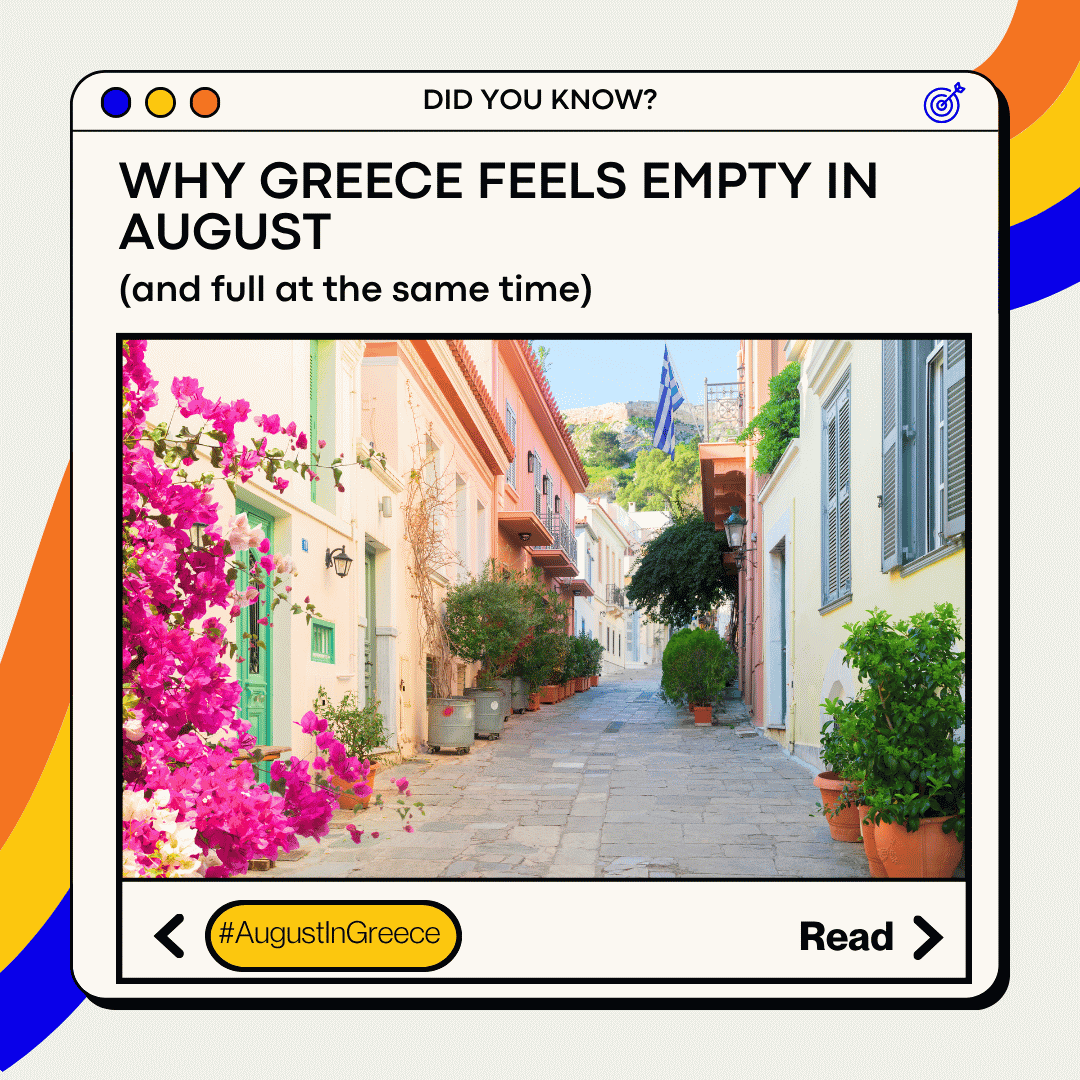
Why Greece Feels Empty in August (and Full at the Same Time)
Learn more


According to International Living’s Annual Global Retirement Index of 2026, Greece has recently been listed as the no.1 place to retire.
With its affordability, advantageous tax policies, Mediterranean weather and superb quality of life, Greece stands out as an ideal setting for those wishing to embrace their retirement years to the fullest.
That said, like any major move abroad, it is important to understand both the advantages and potential challenges before deciding whether retirement in Greece is the right choice for you.
We speak to people every week who are exploring what living in Greece is actually like, and whether it’s the right fit for them. The truth is, retiring in Greece can be incredibly rewarding, but it’s important to look at the pros and cons carefully.
Here is a list of five pros that may help you consider a retirement in Greece.
If you’ve ever researched living in Greece, you’ve probably come across the island of Ikaria. It’s often mentioned as one of the world’s Blue Zones, where people regularly live well into their 90s and beyond. In fact, one in three Ikarians make it to their 90s. But what makes it so interesting isn’t just longevity – it’s how people are living.
Ikaria gives a real glimpse into what expat life in Greece can look like once you’ve fully immersed yourself in the Mediterranean lifestyle. Unlike the US, or most places in the UK, there’s no constant rush, stress, daily annoyances, and very little of the isolation that many retirees may experience elsewhere. Life here naturally revolves around connection, routine, and healthy daily habits that support both physical and mental wellbeing.
Today, most Ikarians are protected from dementia and other chronic diseases that touch most Americans. One of the reasons why the locals there live so long is often attributed to their balanced diet, laid-back lifestyle and positive outlook on life. They enjoy strong red wine without guilt, and late-night domino games with neighbors and friends. Also, Greece’s fresh air and its 300 days of sun (plus its stunningly beautiful landscapes), naturally pull people outside and encourage them to become more physically active.
Here, you’ll find that walking is extremely commonplace. Instead of getting in your car to drive to the grocery store, you have to walk to the nearest shop, pharmacy, or public office. Depending on where you move, and due to the country’s narrow roads, it’s not always convenient to have a car. There are many health benefits of walking, such as lower blood pressure, circulation and heart health improvements, and may even reduce the risk of cognitive decline. The good news is that walking is almost impossible to avoid if you move here.
Diet also plays a big role in why people in Ikaria live so long, because food is not viewed as punishment, nor restrictive. The Ikarian approach to eating is simple and natural. Meals are built around vegetables, legumes, olive oil, and fresh local ingredients. Here, food is less about dieting and more about quality, seasonality, and shared meals. A meal is to be enjoyed over a few hours, and a sweet or savory dessert is to be savored without any guilt.
Another big takeaway from the island of Ikaria and its longevity secret is the level of social and cultural engagement, even later in life. People don’t “slow down” in the way you might expect. They stay curious. They stay involved. It’s completely normal to see older residents attending local festivals, spending hours in conversation at cafés, conversing with other locals or neighbors, playing Tavli, which is Greek Backgammon, and continuing hobbies well into their 70s and 80s.
If you’re in your 60s, 70s or even 80s, the level of social and cultural stimulation is incomparable with anywhere else. Greece isn’t just a place where you come to slow down, it’s a place where you stay culturally stimulated. Here, you’re constantly surrounded by archaeology, history, museums, ancient ruins, and historical sites that you can explore at your own pace. It’s not something you “tick off” once. It becomes part of your everyday life. At almost every block, you’ll find remains of Ancient Greece, or stumble upon an archeological site – which is more common than you think.
There’s also a strong culture of learning. Here, you’ll find a variety of activities and workshops catering to people looking to take up a new recreational hobby, or who are in search of exploring something completely new. It’s very common to find ceramics or pottery workshops, or join in-person language lessons at the frontistirio, a type of local tutoring school you’ll find all over Greece, with options ranging from French, Spanish to Greek.
You will also find local bookstores everywhere, selling Greek mythology and philosophy books. Many of them host events, talks, and small community gatherings. In general, retiring in Greece gives you plenty of opportunities to stay mentally stimulated and socially connected.
Another point that stands out is how community-driven life still feels as an expat. People are present. Neighbors talk to each other, shop owners and restaurant staff remember your name, and there’s a real sense of human connection that many people feel has been lost nowadays in this digital age. For many retirees, especially those coming from the US or Northern Europe, this is a huge shift. You’re not just another customer or face in the crowd. That present, more connected way of living is a big reason why many people end up choosing to live in Greece for the long-term.
From a practical perspective, Greece also offers endless flexibility when it comes to travel. With its practical access to the rest of Europe and North Africa through affordable flights, you can quickly jetset to your next destination on your bucket list without having to cross the Atlantic ocean with expensive long-haul flights. That level of accessibility adds another layer of freedom for you.
Not long ago, the Greek Ministry of Health reposted a viral video on X by British TikToker and expat Ben Morris, who shared his experience with the Greek healthcare system after an emergency.
In the video, he explained how he was treated quickly, professionally, and at little to no cost compared to what he would expect in the UK. He seemed genuinely surprised by the efficiency and care he received, which is what made the clip blow up. You’ll find that private healthcare clinics here treat you with kindness and respect.
Now that you’ve read the five reasons that make Greece an ideal haven for retirement, we will list out a few cons to consider before taking the leap.
Greece’s slow and inefficient bureaucracy is usually the first challenge that expats notice. Administrative processes in Greece can feel slower and more complex than what many people are used to from back in the US or the UK. Simple things like getting your Greek tax number, or setting up a local bank account can be an extremely tedious process. It can even involve a lot of unnecessary back and forth, complicated paperwork or multiple in-person appointments. The bank branch may send you to collect a document from another provider, only to realize that it was a different document required in the first place.
The same applies when applying for your residency permit or if you’re trying to understand Greek tax residency rules. You will most likely find contradictory information online, or be given advice that doesn’t make any sense.
This is where many people end up seeking concierge-level relocation assistance, or by working with an expat consulting firm like My Greek Expat Journey, which can simplify the process, avoid delays, and get everything set up correctly from the start.
Renting a place in Greece as a foreigner can be really offputting. You’re confronted with hefty broker fees and when you’re trying to navigate the Greek real estate market, you’ll find a bunch of unlicensed “professionals” and greedy landlords who just want to make a buck out of you.
There are many red flags in the Greek rental market to be aware of as an expat, and one of them is to avoid signing any unofficial leases. This means that if your landlord demands rent in cash, then you must demand that they upload the lease on Taxisnet (or MyAADE.gov.gr), the official digital platform where rental agreements are declared legally.
In order to legally rent an apartment as a retiree in Greece, you must first obtain your Greek Tax Payer ID. The Greek Tax ID, otherwise known as “AFM”, is a nine-digit identification number that non-residents can obtain before, or upon entering Greece. If you’re one of those people that likes to get a headstart on your AFM application, you can obtain your Greek Tax Number entirely remotely within 2-3 business days through My Greek Expat Journey. Head onto our AFM service page for more information about our fees and remote process.
Another area that can feel confusing if you’re retiring in Greece is understanding how taxes in this country really work. Figuring out how to change tax residency to Greece, what income is taxed, and how tax residency rules apply to your situation is not always straightforward, especially if you are receiving a social security pension, or earn income via investments from abroad.
Understanding your options, whether you’re applying under the Financially Independent Person’s Visa or Golden Visa, is key to making sure your tax obligations are structured properly from the beginning.
Even in a country as beautiful as Greece, there is always an adjustment period. Things move at a different pace, systems work differently, and daily life may not always match your expectations right away. This is a normal part of moving to a new country and settling into a new environment.
After the honeymoon phase, where everything feels exciting, you will experience a stage of culture shock, where the reality of being in a new place starts to set in. You’ll see that things don’t work quite as well as back home, and you’ll start to miss your favorite comfort food that the corner store used to sell.
Especially if you’ve had a daily routine from back home, it can take some time to adjust to a new way of life. But don’t worry, this expat adjustment cycle is perfectly normal for someone moving abroad, and is something that everyone experiences. Luckily, following the adjustment period, which can be full of ups and downs, you’ll find that Greece starts to feel like home. In this time, you are no longer comparing everything to your home country. Instead, you have adapted to the culture and found your rhythm. You understand both the positives and the challenges and have learned how to navigate them. This is where expat life in Greece becomes sustainable and genuinely enjoyable.
One thing that can make a big difference in transitioning into a new culture is learning the language. Even a basic level of Greek makes it easier to interact with the locals, which can help you feel more integrated into the community. Knowing how to speak the language can help you in everyday situations, such as dealing with public service employees, or the plumber, who may not speak any English. Many expats find that taking structured Greek lessons, such as through Berlitz Athens, helps them settle in faster and feel more confident in navigating daily life.
To get in touch with a Berlitz Language Coordinator to find the perfect program for your relocation timeline, send us an email at info@mygreekexpatjourney.com.
Most people find that once they move through this initial phase, the lifestyle and quality of life far outweigh the early challenges, making living in Greece long-term as a retiree incredibly rewarding.
Of course, there are still logistics to think about. If you’ve made the decision that you want to retire here, you’ll need to look at your residency options. Luckily, Greece offers flexible pathways for foreign or American retirees, such as the Financially Independent Person’s Visa, also known as the Greek Retirement Visa, or the Golden Visa. If you are considering this option, it’s worth understanding the full Greece retirement visa requirements before applying.
Since Greece is known for its slower bureaucracy, it can be helpful to work with the right relocation consultant, such as My Greek Expat Journey, to simplify the process and avoid unnecessary delays.
Retirement here isn’t just about affordability or paperwork. It’s about quality of life. It’s about staying engaged, connected, and genuinely enjoying your day-to-day life. For many people, that’s exactly what they’re looking for when they reach their retirement years.
Are you ready to make Greece your retirement destination? Schedule a 15-minute discovery call with us to learn how we can make that dream a reality.

.avif)
.svg)


